Stop missing critical markers of relapse in Acute Myeloid Leukemia
Miss 95% fewer drivers of relapse with a single tube for monitoring remission.
Inquire about collaborations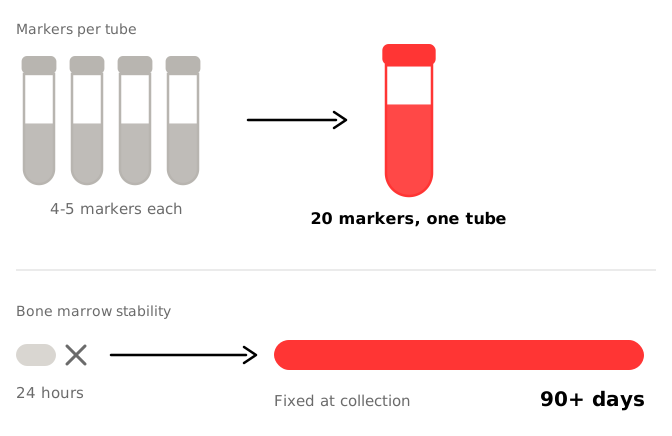
Bone marrow degrades quickly. Current panels miss drivers of relapse.
Sample quality and panel depth decide whether residual disease is found before it becomes clinical relapse.
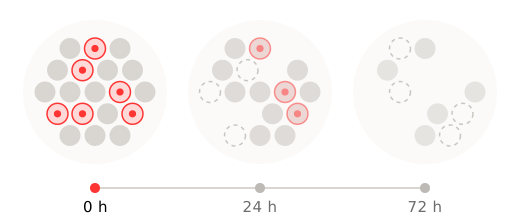
Bone marrow degrades outside a short window
Myeloid cells degrade within 24 to 72 hours of collection. Storage and transit erase the populations that matter most for AML MRD, so tests can miss disease that is still there.
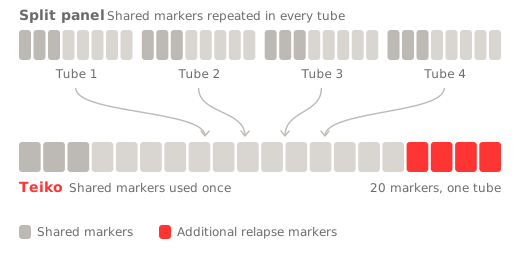
Current panels miss drivers of relapse
Finding leftover leukemic cells takes a full marker panel from enough viable cells. Splitting a patient's sample across multiple tubes wastes precious marker real estate. For patients, this means that the current panels may miss critical drivers of relapse.
Our results are demonstrating 90+ day stability in bone marrow.
We are developing a clinical MRD test on fixed bone marrow using TokuKit, already proved on blood.
Source: ICCS 2026 poster
Our test will deliver a 4X reduction in tubes with an estimated ~95% reduction in missed cases of relapse
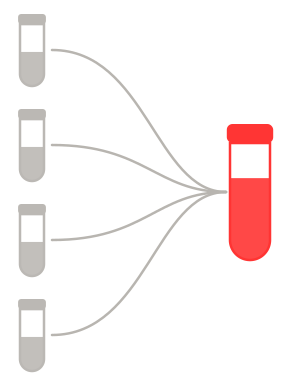
No cells are spent splitting the aspirate across tubes that each carry only a fraction of the panel.
Current status quo
8 markers per tube
Splitting the aspirate across 4 tubes repeats backbone markers in each one, using up panel space that could find markers of relapse.
Teiko
20 markers, one tube
All 20 markers from a single tube. Cells stay together for the full panel instead of being divided across tubes.
Pre-Analytic Stabilization of Bone Marrow Aspirates for AML MRD Testing
Lily Shang, PhD and collaborators showed that bone marrow aspirates can be stabilized at collection, shipped, and analyzed centrally by spectral flow cytometry. ICCS 2026 poster #218.
Read the ICCS 2026 news post