Enhanced Preservation of Real-World Diseased Immune Signatures in Stabilized Whole Blood Enables Longitudinal Studies of Multiparameter Immune Monitoring
Chaoyuan Kuang, MD, PhD, Sacha Martiny*, Angelynn Huang*, McKenna Coughlin, Landon Wellendorf, Justin Jarrell, PhD, Ramji Srinivasan, Li-Chun Cheng, PhD
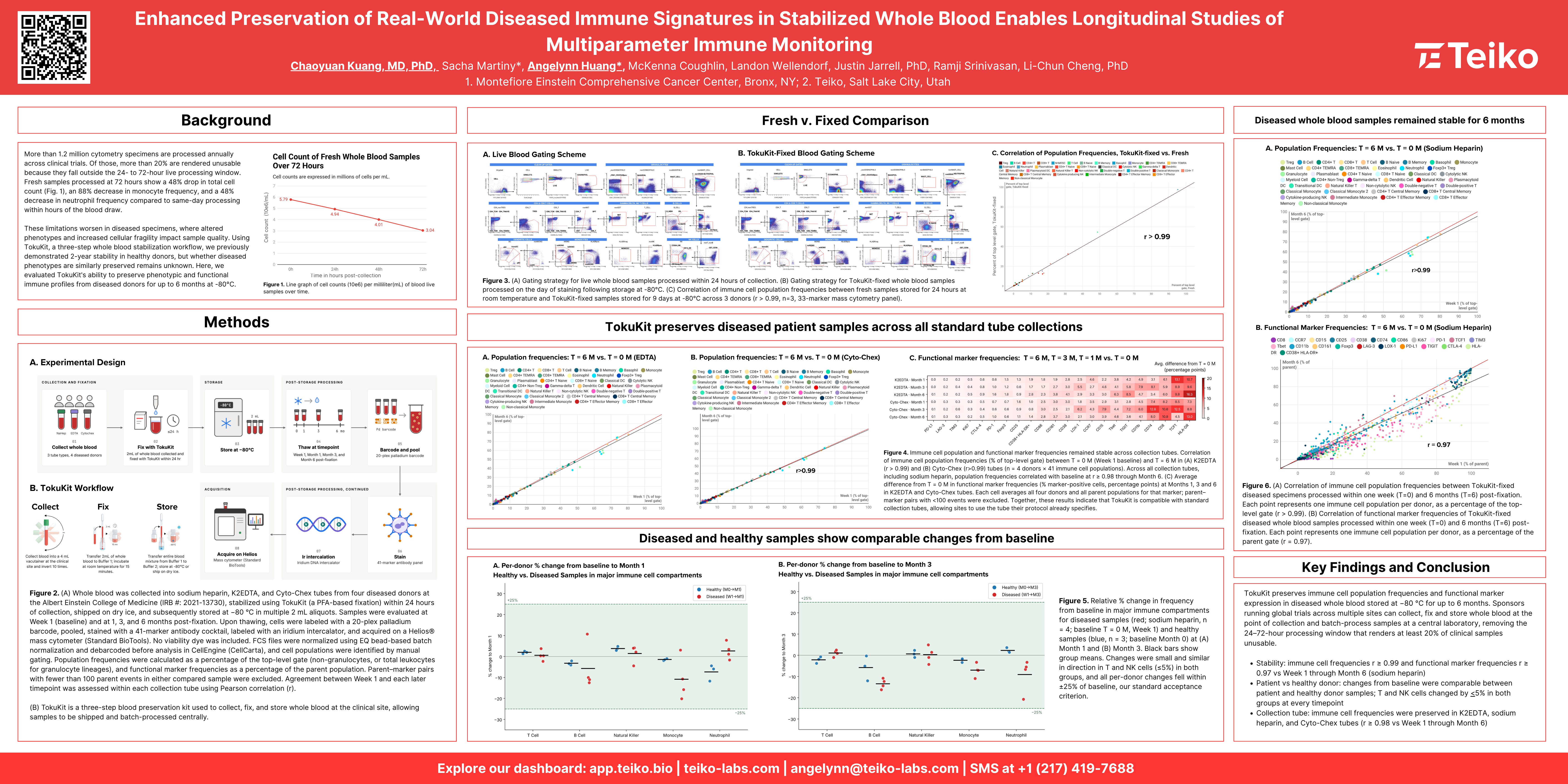
More than 1.2 million cytometry specimens are processed annually across clinical trials. Of those, more than 20% are rendered unusable because they fall outside the 24- to 72-hour live processing window. Fresh samples processed at 72 hours show a 48% drop in total cell count (Fig. 1), an 88% decrease in monocyte frequency, and a 48% decrease in neutrophil frequency compared to same-day processing within hours of the blood draw.
These limitations worsen in diseased specimens, where altered phenotypes and increased cellular fragility impact sample quality. Using TokuKit, a three-step whole blood stabilization workflow, we previously demonstrated 2-year stability in healthy donors, but whether diseased phenotypes are similarly preserved remains unknown. Here, we evaluated TokuKit's ability to preserve phenotypic and functional immune profiles from diseased donors for up to 6 months at -80°C.