Antigen density quantification by mass cytometry using quantum simply cellular bead-based calibration
Diego López Ph.D., Carly Lancaster Ph.D., McKenna Coughlin, Sacha Martiny, Landon Wellendorf M.Eng., Kristina Magee MD, Ph.D., Hannah Selken, Justin Jarrell Ph.D., Ramji Srinivasan, Li-Chun Cheng Ph.D.
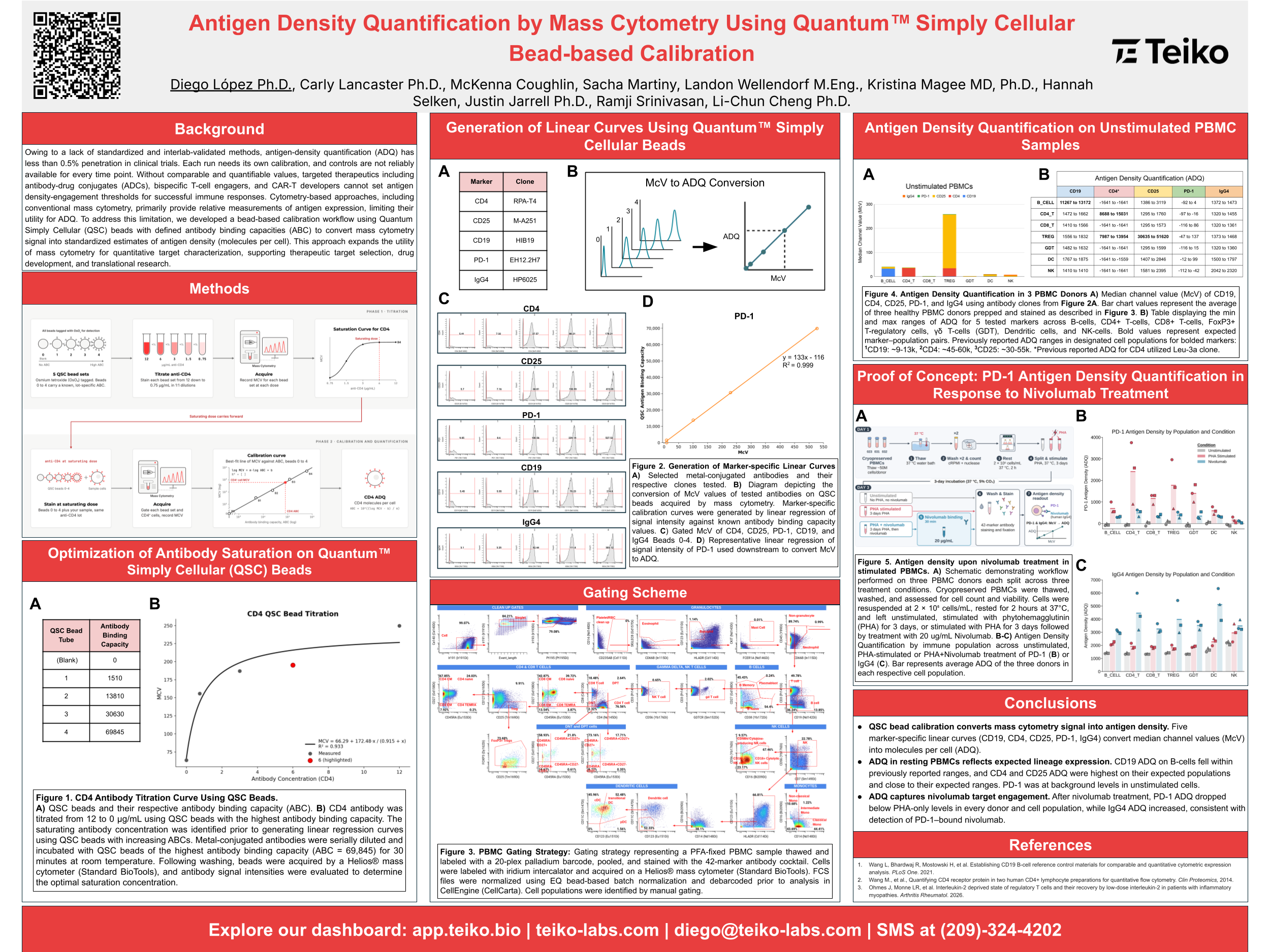
Owing to a lack of standardized and interlab-validated methods, antigen-density quantification (ADQ) has less than 0.5% penetration in clinical trials. Each run needs its own calibration, and controls are not reliably available for every time point. Without comparable and quantifiable values, targeted therapeutics including antibody-drug conjugates (ADCs), bispecific T-cell engagers, and CAR-T developers cannot set antigen density-engagement thresholds for successful immune responses.
Cytometry-based approaches, including conventional mass cytometry, primarily provide relative measurements of antigen expression, limiting their utility for ADQ. To address this limitation, we developed a bead-based calibration workflow using Quantum Simply Cellular (QSC) beads with defined antibody binding capacities (ABC) to convert mass cytometry signal into standardized estimates of antigen density (molecules per cell). This approach expands the utility of mass cytometry for quantitative target characterization, supporting therapeutic target selection, drug development, and translational research.